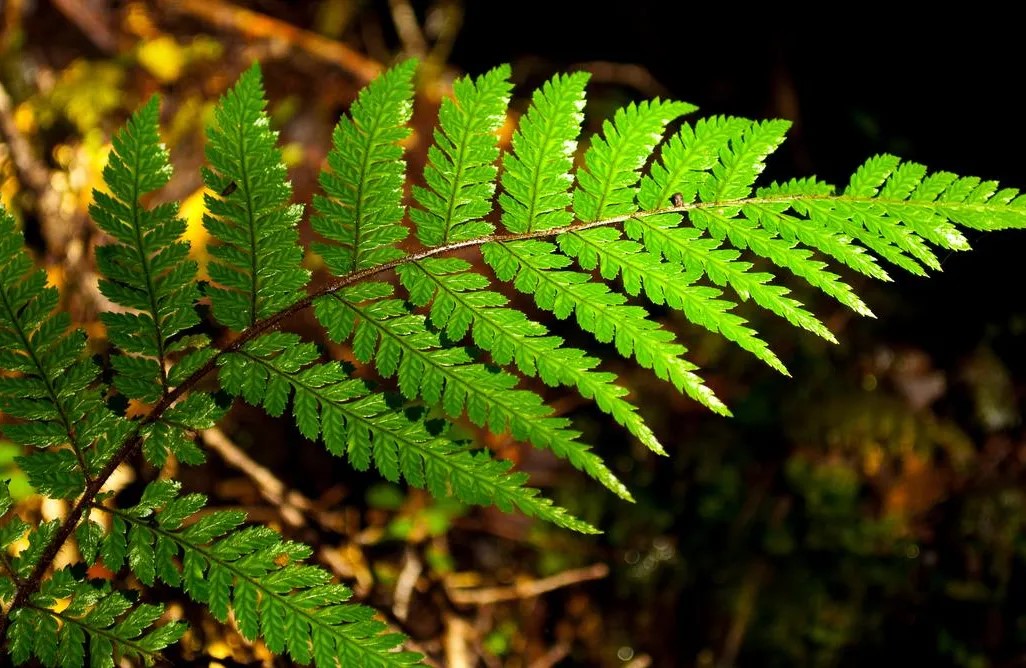
Why Natural Beauty Still Captivates the Human Eye
We stop for sunsets. We crane our necks to take in mountain vistas. We stand transfixed by a single flower pushing through a crack in concrete. Despite living in a world of screens, artificial lights, and manufactured wonders, nature’s beauty has lost none of its power over us. A digital image can be perfect, but it rarely takes our breath away the way a real forest or a starlit sky does. Why? Why does natural beauty, ancient, unscripted, often imperfect, still hold such a deep grip on the human eye and heart?
Frequently Asked Questions
Is our preference for Natural Beauty universal across cultures, or is it learned?
Research suggests a strong universal component, but culture shapes expression. Studies show that people from very different cultures prefer similar landscape features: water, trees, open views, and moderate complexity. However, what people consider “beautiful” within those features, a particular tree species, a specific colour palette, can be influenced by local ecology and cultural stories. So the deep attraction is likely innate, but the details are refined by experience.
Can human‑made environments ever be as captivating as natural ones?
Sometimes, but usually when they mimic or incorporate natural elements. Buildings that use natural light, organic forms, and views of greenery are rated as more attractive and less stressful. Some human creations, like the Taj Mahal or a Japanese garden, achieve beauty through harmonious integration with nature. However, purely artificial environments like windowless offices and uniformly lit corridors rarely evoke the same restorative response. Nature offers a kind of complexity and unpredictability that is very difficult to manufacture.
If Natural Beauty beauty is so good for us, how can we bring more of it into daily urban life?
Small interventions have large effects. Indoor plants, green walls, and views of trees from windows improve mood and productivity. Urban parks, even small ones, offer respite. Even listening to natural sounds, such as birdsong or flowing water, has measurable benefits. The key is to design cities with nature in mind, not as an afterthought. Every window that looks onto a garden, every rooftop planted with wildflowers, is a step toward making natural beauty accessible to those who cannot easily escape to the wilderness.
The Evolutionary Gaze: Why Our Ancestors Trained Our Eyes
Some scientists believe our preference for certain landscapes is hardwired. The theory suggests that humans evolved in East African savannahs: open spaces with scattered trees, water sources, and panoramic views. Even today, people tend to prefer landscapes that resemble this environment, park‑like settings with water and visible pathways. Natural beauty, in this sense, is the look of safety, resources, and survival.
Additionally, the biophilia hypothesis proposes that humans have an innate tendency to seek connections with nature and other forms of life. Our brains are wired to notice patterns that signal health and abundance: a balanced canopy, the curve of a river, the symmetry of a leaf. These patterns once helped us find food, avoid predators, and navigate terrain. The pleasure we feel when viewing them is evolution’s reward for paying attention. Research in environmental psychology shows that people are drawn to scenes with “refuge and prospect”: a place to hide (refuge) and a view of the surroundings (prospect). Rolling hills, forest edges, and coves offer this combination. Natural beauty often contains these elements, tapping into a deep sense of safety and exploration.
The Neurological and Emotional Hook: What Beauty Does to Our Brains
Natural scenes have a unique effect on the brain. They engage what is called “soft fascination”, a gentle, effortless form of attention that allows our directed attention to rest. Unlike city scenes, which demand constant processing, natural beauty allows the brain’s default mode network to wander. This is why a walk in the woods leaves us feeling restored, while a walk down a busy street can be draining. Additionally, the human brain rewards novelty and pattern discovery. Natural beauty is never the same twice: light shifts, clouds move, leaves flutter. Each glance offers a slightly different arrangement. This gentle unpredictability triggers small releases of dopamine, the feel‑good neurotransmitter. Artificial scenes are often static or predictably repetitive; nature offers endless variation.
When we encounter vast or ancient natural beauty such as a canyon, a redwood tree, or a waterfall, we sometimes experience awe. Awe reduces self‑focus, slows time perception, and increases feelings of connection. This response is linked to the vagus nerve and has measurable effects on inflammation and stress hormones. Natural beauty captivates us not just because it pleases, but because it literally calms and grounds our nervous system.
The Cultural and Philosophical Anchor: What We Project onto Nature
For much of Western history, nature was seen as wild and dangerous. The Romantic movement of the 18th and 19th centuries reversed this; it portrays nature as sublime, pure, and spiritually uplifting. This cultural lens still colours how we see natural beauty: as an antidote to industrial ugliness, a refuge from the artificial. We are captivated not only by what nature is, but by what we believe it represents: authenticity, freedom, and permanence.
Across cultures, natural features such as mountains, rivers, and trees have been seen as sacred. Pilgrimages to these places continue today, from Mount Fuji to the Ganges to Uluru. The beauty of these sites is intertwined with religious and cultural meaning. Even for secular people, a sunrise over a mountain can feel transcendent. Nature becomes a place to encounter something larger than the self.
However, in an age of screens, notifications, and synthetic materials, natural beauty offers a contrast that feels increasingly precious. We are captivated because it is one of the few remaining experiences that is fully unscripted, unpredictable, and indifferent to our desires. A sunset does not care if we photograph it. A forest does not optimise for our convenience. This very indifference is part of its appeal: it feels real in a way that many human‑made things do not.
Wind Up
Furthermore, natural beauty captivates the human eye for reasons that are ancient and newly urgent. It speaks to our evolutionary past, whispering of safety and resources. It soothes our overstimulated brains, offering rest and wonder. And it anchors us in something larger than our own inventions, reminding us of a world that operates on its own terms. We will never stop being drawn to it. The real question is whether we will protect the sources of that captivation. As we pave over meadows, dim the stars with light pollution, and silence the sounds of wild places, we risk losing not just beauty but the deep, wordless wisdom it carries. The eye that lingers on a sunset is an eye that remembers where it came from. Let us keep looking. And let us keep what we see.
Comments