How Your Face Might Reflect Your Health: A Guide to Early Signs
Your face does more than reflect your emotions. It often carries subtle signs of what is happening inside your body. Long before modern diagnostic tools existed, traditional healing systems studied the face as a guide to internal balance. Today, medical science supports parts of that idea. Changes in the eyes, skin, lips, and even facial hair can offer early clues about nutritional status, hormone levels, and organ function. This does not mean the face can diagnose illness. Rather, it serves as an early signal system. When you learn to observe these changes with care and restraint, you begin to notice patterns that may otherwise go ignored. In that sense, your face becomes less about appearance and more about awareness.
Frequently Asked Questions (FAQs)
Can my Face really predict a serious disease before I feel any other symptoms?
Yes, certain changes can appear before you feel unwell. Eye exams, for instance, can detect signs of diabetes (like tiny retinal haemorrhages) or high blood pressure (damaged blood vessels) long before classic symptoms like thirst or headaches appear. However, these are findings from a professional exam, not a home mirror check.
What is Face mapping, and is it backed by modern medicine?
Face mapping is an ancient diagnostic practice found in Traditional Chinese Medicine (TCM) and Ayurveda, which links specific facial zones to internal organs (e.g., the forehead to the digestive system). While Western medicine has not broadly validated the specific one-to-one zones of face mapping, it acknowledges that skin health is intrinsically linked to factors like hormones, gut health, and nutrition. As modern medicine integrates more with holistic approaches, concepts like face mapping are being re-examined and incorporated into fields like functional medicine, where they are used to look beyond the skin for clues to internal health.
Is looking at my Face for health clues the same as "diagnosing" myself?
No. This is the most important distinction. Looking at your face is a tool for "awareness and early detection", not self-diagnosis. For example, noticing a yellowish patch (xanthelasma) on your eyelid doesn't mean you have a heart condition, but it is a valid reason to ask your doctor for a cholesterol test. Your doctor is the only one who can confirm a diagnosis after running proper tests.
The Evolution of Face Reading
The idea that the face reflects internal health has deep historical roots. In Traditional Chinese Medicine and Ayurveda, practitioners developed systems that linked specific areas of the face to organ systems within the body. The forehead was associated with digestion, the nose with heart health, and the chin with hormonal balance. Although these traditional frameworks do not align perfectly with modern medical science, they share a common principle. The body operates as an interconnected system, and visible changes often reflect internal conditions. Recent developments in technology have brought new attention to this idea. Artificial intelligence systems are now being trained to analyse facial features and detect patterns linked to ageing, cardiovascular risk, and metabolic conditions. While still evolving, these tools suggest that the face may hold more measurable health data than previously understood.
The Awareness of Facial Signs and Balance
It is important to approach facial signs with balance. Not every change signals a serious problem. Many symptoms have simple explanations, such as environmental exposure, stress, or temporary nutritional gaps.

The key lies in persistence and pattern. A single occurrence may mean little, but a change that remains over time deserves attention. For example, a mole that shifts in shape, colour, or size should be examined using the ABCDE guideline. This stands for asymmetry, irregular borders, uneven colour, increasing diameter, and evolution over time. These features can indicate potential skin cancer and require prompt evaluation. Similarly, ongoing yellowing of the eyes, repeated skin rashes, or unexplained hair changes should not be ignored. In such cases, the face is acting as a messenger. The appropriate response is not fear, but action in the form of professional consultation.
How Your Face Can Reflect Your Health
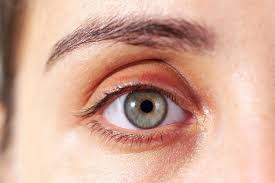
1. What Your Eyes Tell You: The eyes are among the most revealing features of the face. Doctors often describe them as a window into the body, not only because of vision, but because they reflect vascular and neurological health. A yellow tint in the whites of the eyes is one of the clearest warning signs. This condition, commonly associated with jaundice, often points to liver stress. It may arise from infections such as hepatitis or from blockages in the bile ducts. When this change appears, it is rarely something to ignore.
Another important sign lies inside the lower eyelid. When you gently pull it down and observe a pale colour instead of a healthy reddish tone, it may suggest iron deficiency anaemia. This condition develops when the body lacks enough iron to produce adequate red blood cells. Fatigue often follows, but the facial sign can appear earlier. You may also notice a faint white or grey ring forming around the cornea. This is known as arcus senilis. In older adults, it can be a normal part of ageing. In younger individuals, however, it may indicate elevated cholesterol levels. When seen early in life, it can signal an increased risk of cardiovascular disease and should prompt further testing.
2. What Your Skin Tells You: The skin is the body’s largest organ, and it often reflects internal imbalance before other symptoms emerge. Facial skin, in particular, tends to show these changes clearly. A yellowish tint across the skin, especially when it appears alongside fatigue or digestive discomfort, may suggest liver dysfunction. It is important to distinguish this from temporary colour changes caused by diet, such as excessive intake of carotene-rich foods.
Another well-known sign is the butterfly-shaped rash that spreads across the cheeks and the bridge of the nose. This pattern is strongly associated with lupus, an autoimmune condition in which the body mistakenly attacks its own tissues. While the rash alone does not confirm the disease, it is a recognised clinical feature that warrants medical attention. Small yellowish deposits around the eyelids, called xanthelasma, are also worth noting. These soft plaques are not usually painful, but they are often linked to high levels of cholesterol in the blood. Their presence can serve as a visible cue to assess cardiovascular health more closely.
3. What Your Lips and Hair Tell You: Beyond the skin and eyes, other facial features also provide useful information. The lips, for example, respond quickly to changes in hydration and environmental conditions. Cracked or persistently dry lips are often dismissed as a minor inconvenience. In many cases, they result from weather exposure or inadequate fluid intake. However, when the condition persists despite proper care, it may indicate dehydration, allergic reactions, or sensitivity to certain medications.
Facial hair patterns can also reveal underlying hormonal changes. In women, the sudden appearance of coarse hair along the chin or jawline may be linked to polycystic ovary syndrome. This condition affects hormone levels and is often associated with irregular menstrual cycles and insulin resistance. Another subtle but telling sign is the thinning of the eyebrows, particularly along the outer edges. This pattern has been associated with thyroid disorders. Since the thyroid gland regulates metabolism, changes in its function can influence hair growth and texture across the body.
Wind Up
Furthermore, it is easy to overlook the simplest tool available to you. The mirror, used with awareness and care, can serve as an early point of connection between your body and your attention. Your face is not a diagnostic instrument, but it is a responsive surface. It reflects hydration, nutrition, stress, and internal balance in ways that are often visible before discomfort begins. When you learn to observe these signals without anxiety, you shift your role in your own health. You become attentive rather than reactive.
This perspective changes the purpose of observation. Instead of searching for flaws, you begin to recognise patterns. Instead of reacting with alarm, you respond with curiosity and care. The face, in this sense, becomes less about appearance and more about communication. To trust your inner mirror is to accept that your body speaks in quiet ways. A slight change in colour, texture, or symmetry may not mean illness, but it may invite attention. When you listen early, you give yourself the chance to act early.
Comments