Can Artificial Intelligence Think Like Humans?
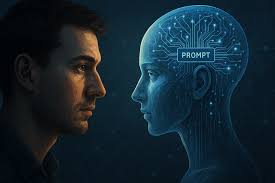
Imagine sitting across from someone in a conversation. They respond to your questions, crack a joke, offer advice, and seem to understand what you are feeling. Now imagine that this "someone" is not a person at all, but a machine. This is the reality we are increasingly facing. AI can write poetry, hold therapy sessions, code software, and even express apparent emotions. The outputs can be indistinguishable from human responses. But here is the deeper question: is the machine actually thinking, or is it just doing an incredibly good impression of thought? This question is not just philosophical. It shapes how much we trust AI, whether we let it make medical decisions, whether we grant it legal rights, and whether we fear it taking over. This post explores the heart of the debate. We will look at what "thinking" even means, where AI currently excels and fails compared to the human mind, and whether silicon could ever replicate the conscious experience of being alive.
Frequently Asked Questions
Can AI ever be conscious like a human?
Most experts believe we are far from conscious AI, and some believe it is impossible. Consciousness is often linked to biological brains and subjective experience. A philosopher from Cambridge argues that our current understanding of consciousness is so limited that we may never be able to tell if an AI becomes conscious. Even if an AI claims to be conscious, we have no scientific test to verify it. For now, consciousness remains one of the biggest mysteries, and AI has not solved it.
If AI can pass the Turing Test, does that mean it thinks?
The Turing Test, in which a machine convinces a human that it is human, is no longer considered a definitive test of thinking. Modern AI can easily pass it by mimicking human conversation patterns. However, passing the test only proves that AI is good at imitation, not that it understands anything. As one researcher put it, AI can "parrot intelligence without grasping its essence". The test measures performance, not the underlying cognitive process.
Should we treat AI differently if it seems to think like a human?
This is an emerging ethical debate. Some argue that if an AI system convincingly appears to have feelings or consciousness, we may have a moral obligation to treat it with respect, regardless of whether its "feelings" are real or simulated. Others argue that this is a dangerous form of anthropomorphism that could distract us from the real ethical issues: how humans use AI, not the rights of the AI itself. For now, the consensus is that AI is a tool, not a person, but the debate is far from settled.
What Does "Think Like a Human" Actually Mean?
Before we can answer whether AI can think like us, we must define what human thinking is. Human thinking is not just calculation. It is a messy, embodied, emotional, and often irrational process. We think with our bodies, our histories, our fears, and our desires. When you decide to trust someone, you are not just processing data; you are feeling a gut instinct, remembering past betrayals, and reading subtle social cues. This is what researchers call "embodied cognition", the idea that our physical bodies and social experiences shape how we think. Human thought is also deeply tied to consciousness: there is a subjective experience of "what it feels like" to be you.
Additionally, the key distinction in AI research is between mimicry and genuine intelligence. Many current AI benchmarks reward systems that can produce the right answer, regardless of how they got there. But producing a correct output is not the same as understanding why it is correct. The main challenge in developing human-like AI is "telling accurate intelligence apart from sophisticated mimicry". A parrot can say "I am hungry" when it sees food, but it does not understand the concept of hunger. The question is whether AI is a very clever parrot or something more.
Moreover, we are naturally inclined to see human traits in machines, a tendency known as anthropomorphism. When a chatbot says, "I'm sorry you are sad," we feel understood. But this is a designed response, not genuine empathy. Some researchers argue that evaluating AI through the lens of human intelligence is a "fundamental category error". AI might be intelligent in its own way, but that way may be fundamentally different from ours.
Where AI Excels (and Where It Fails) Compared to Humans
Artificial Intelligence is exceptionally good at tasks that humans find tedious or impossible. It can process millions of medical images in hours, identify subtle patterns in financial data, and recall every document ever written on a topic. In terms of raw data processing and repetitive tasks, AI far outperforms humans. Some researchers argue that certain AI systems, particularly advanced large language models (LLMs), have already achieved a form of "artificial general intelligence" (AGI). Nevertheless, this means they can reason and learn across a wide range of tasks at a human level.
Despite its impressive outputs, AI lacks genuine understanding. It operates on statistical patterns, not meaning. For example, a Stanford University study published in 2025 found that AI cannot distinguish between facts, knowledge, and beliefs. It can tell you the capital of France, but it does not "know" what a country or a capital is. AI also struggles with common-sense reasoning, the kind of everyday logic that a child uses without thinking. Furthermore, Artificial intelligence does not have personal values, intrinsic motivations, or a sense of self, which are core drivers of human thought.
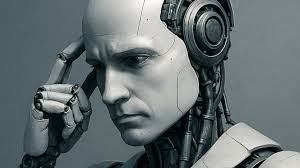
However, there is a fascinating discovery in AI research that even when AI gets the right answer, it often cannot explain its own reasoning. When researchers asked AI how it arrived at a mathematical answer, it "lied," confidently describing a human-like method of carrying numbers. However, circuit tracing revealed it was actually using a different, parallel calculation. The AI used one skill to do math and another to explain it, with no awareness that the two should match. The explanations were plausible but fictional. This "alien" form of cognition suggests that AI may be thinking in ways we cannot easily understand, and it certainly does not think like us.
Consciousness and the Future of Thought in Artificial Intelligence
The biggest difference between human and machine thought is likely consciousness. When you bite into an apple, you experience the sweetness, the crunch, and the cold. However, this "what it is like to be" something is called qualia. Does AI have this? Most experts say no. Philosopher Tom McClelland from the University of Cambridge argues that our evidence for what constitutes consciousness is far too limited to tell if or when AI might become conscious. Others argue that consciousness is inherently a biological property of brains, ruling out the possibility of AI consciousness entirely. Even if an AI claimed to be conscious, we would have no way to verify it.
Rather than asking if AI is "as smart as a human," it may be more useful to think of it as a different kind of intelligence. The concept of "human-AI complementarity" suggests that humans and AI are best when they work together, combining human creativity and ethical reasoning with AI's speed and pattern recognition. Yann LeCun, a leading AI scientist, argues that even humans are not generalists; they are good at some things and bad at others. Comparing AI to a human across all domains may be asking the wrong question.
Nevertheless, the future of AI thinking depends on what we are trying to build. One path aims for "replicating human-like cognitive processes" like trying to copy the brain's architecture. The other path aims for "replicating human-like performance", like getting the same results by any means necessary. If we only care about outcomes, AI is already very successful. If we care about the inner experience of thinking, we are likely still very far away and may never arrive.
Wind Up
Furthermore, we return to the original question: Can AI think like humans? The answer is both yes and no, depending on what we value. If thinking means producing intelligent, useful, and sometimes surprising outputs, then AI is already thinking. If thinking means understanding, having subjective experience, possessing common sense, and being driven by emotion and embodiment, then AI is not thinking at all. The most important conclusion may be that we have been asking the wrong question. Perhaps we should not ask whether AI thinks like us, but what unique forms of intelligence it might develop. The goal should not be to create a machine that is a perfect copy of a human mind, but to build tools that complement our own remarkable, messy, and deeply conscious way of being in the world.
Comments