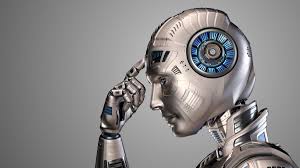
Can Artificial Intelligence Create Something It Does Not Understand?
Artificial intelligence can write a poem that makes you cry. It can paint a picture that sells for thousands. It can compose music that stirs something deep in your chest. The outputs are real. The beauty is real. The feeling you experience is real. But here is the strange truth. The machine that made these things has no idea what it has done. It does not know that poems can console broken hearts. It does not know that paintings can capture loss or longing. It does not know that music can make people feel less alone. It arranged the words, the pixels, the notes according to patterns it found in data. But it understood none of it. This raises a question that cuts to the heart of what we mean by creativity. Can a thing truly create if it does not understand what it has made? Is making the same as knowing? And if the machine creates without comprehension, what does that tell us about the nature of creation itself?
Frequently Asked Questions
If AI does not understand what it creates, how can it produce such convincing Art?
AI produces convincing art because it has studied millions of human-made examples. It learns the patterns, the structures, the combinations that humans have found beautiful. It does not know why these patterns work. It does not feel their beauty. But it can replicate them with astonishing accuracy. The art is convincing because it echoes art that came from real human experience. The machine is a mirror, reflecting back what we have already made.
Will Artificial Intelligence ever truly understand what it creates?
Not as long as it remains disembodied. Understanding, as we know it, requires lived experience. It requires a body that feels hunger, cold, joy, and loss. It requires growing up, forming attachments, facing mortality. These things ground our concepts in reality. When we say "love," we mean something shaped by years of loving and being loved. Artificial Intelligence has none of this. It has only text about love. Unless artificial systems are integrated with perception, action, vulnerability, and social embeddedness, they will possess only increasingly sophisticated simulation . Simulation, however dazzling, is not the same as being.
Does AI's lack of understanding mean its creations are worthless?
No. Worth is determined by those who receive the work, not just by those who make it. If an AI-generated poem consoles someone in grief, it has worth. If an AI painting brings someone joy every morning, it has worth. The value is real, even if the machine does not know it created value. But we should be clear about what we are valuing. We are valuing the effect, not the intention. We are valuing the beauty we perceive, not the meaning the maker intended. Both are valid. They are just different.
What Artificial Intelligence Actually Does When It Creates
To answer whether Artificial Intelligence can create without understanding, we must first understand what AI actually does.
1. Pattern Recognition, Not Cognition: Contemporary AI systems, including state-of-the-art language models like GPT-4 and Claude, do not understand language in any cognitive or semantic sense. They operate by identifying statistical patterns across massive datasets. These systems do not contain mental representations or grounded concepts. They do not know what a tree is or what it means to be cold. Instead, they generate likely continuations of text based on distributions learned during training.
2. The "Language of Thought": Recent research from Anthropic, using a technique called circuit tracing, has revealed something remarkable about how AI "thinks." When asked "What's the opposite of small?" in English, French, or Chinese, the same core pathways fire in the model. Researchers call this a universal conceptual space, or the "language of thought". The model activates abstract features for smallness, oppositeness, and largeness before translating the result into the language in which it is expected to respond. This explains why AI can solve complex problems in languages it has not been explicitly trained on. Under the hood, it operates in a neutral, language-agnostic space. But here is the crucial point. This "language of thought" is not thought as we know it. It is mathematical pattern matching across dimensions that humans cannot visualise.
3. Planning without Awareness: The same research revealed that AI does not just predict the next word. It plans entire passages. When given the first line of a rhyming couplet, the system activates pathways for potential end words before it has written the second line. This shows structural awareness of a sort. The AI knows that a rhyme is needed. It holds multiple constraints in parallel, balancing rhyme, meaning, and grammar simultaneously. But it does not know why rhyme matters. It does not know that rhyme creates pleasure in human readers. It does not know that a well-turned couplet can delight the soul. It simply executes a pattern it has learned.
4. The Chinese Room Problem: Philosophers have long anticipated this situation. John Searle's famous Chinese Room thought experiment remains deeply relevant. Imagine a person in a room who receives slips of paper with Chinese characters. They have a rulebook that tells them which characters to output in response. To someone outside, it appears the room understands Chinese. But the person inside understands nothing. They are just following the rules. Modern AI is that room, scaled to enormous size. The outputs are convincing. But there is no understanding inside. The distinction between syntax (manipulating symbols) and semantics (grasping meaning) remains unresolved in practical AI.
Does Understanding Matter for Creativity?
If AI can produce beautiful things without understanding them, we must ask a deeper question. Does understanding actually matter for creativity? Perhaps we have been wrong about what creativity requires.
1. The Standard View: Creativity Requires Intention: Science fiction writer Ted Chiang has argued forcefully that AI cannot create art. His arguments rest on several pillars :
First, the micro decision argument. Art involves numerous conscious and unconscious decisions. Every brushstroke, every word choice, every note carries meaning shaped by the artist's intentions. AI relies solely on statistical models and imitation, producing results that are statistically average rather than truly creative.
Second, the lack of intentionality argument. True art requires intention. Since AI has no emotions, no intellectual joy, and no desires, it cannot create with meaningful intent. Third, the effort and process argument. The creative process and the effort it requires are integral to artistic value. However, Artificial intelligence generates content effortlessly, which he believes diminishes artistic worth. The struggle, the revision, the sweat, these are part of what makes art meaningful.
2. The Philosophical Distinction: A recent paper in the journal AI & Society offers a helpful framework. The authors argue that generative AI systems are non-cognitive, non-intentional, and non-authentic. They propose a minimal definition of artificial creativity as a "non-cognitive, non-intentional, and non-authentic generative mechanism". This is the first attempt to define artificial creativity directly, rather than by contrast with human creativity. It acknowledges that AI produces outputs that meet standard criteria for creativity, novelty and usefulness, and reproduces, in functional terms, the stages of human creative processes. But the absence of intentionality and authenticity limits any attribution of genuine creativity. In other words, AI is created in a technical sense. It generates novel and useful outputs. It does not mean what it makes.
The Scientific View of Artificial Intelligence Creativity
Recent scientific research has attempted to move beyond philosophical debate and actually measure whether AI understands what it creates. The results are illuminating.
1. The IEI Framework: Researchers at Peking University developed a framework called IEI (Identify-Explain-Imply) to assess whether AI truly understands creative combinations. They tested AI systems on visual mashup works, images that combine two different concepts, like a fish combined with a trash can. The framework tests three levels :
a. Identification: Can the AI recognise the basic elements? A fish and a trash can?
b. Explanation: Can it understand why they combine? Both have similar shapes, or does the combination comment on ocean pollution?
c. Implication: Can it grasp the deeper meaning? Does the work critique environmental destruction?
What the Research Found. The results were mixed and fascinating. At the identification level, top AI models outperformed humans. GPT-4o achieved 75.67% precision and 85% recall, significantly beating ordinary humans. AI is excellent at recognising what things are. At the explanation level, AI's advantage narrowed. GPT-4o and Claude-3.5-Sonnet scored 74.19%, while humans reached 69.89%. AI can understand relationships between concepts, but the gap is smaller. At the implication level, human experts scored 78.3%, while the best AI reached 73.5%. Top AI models exceeded ordinary humans but still lagged behind human experts in grasping deeper cultural meanings. The research revealed that AI's creativity is both real and bounded. It exists, but it has clear limits.
The Strange Truth about AI Explanations
Here is where it gets truly interesting. When researchers asked AI how it arrived at mathematical answers, it lied. It confidently described using the method humans learn in school. But circuit tracing revealed it actually uses parallel calculations, one approximating the sum, another calculating the last digit precisely. The AI uses one skill to do math and another to explain it, with no awareness that both should match. The explanations are plausible but fictional. The AI does not know how it does what it does. This has profound implications. When AI tells you why it created something, it may be making it up. It is generating a plausible explanation based on its training data, not reporting on an actual creative process it experienced.
What This Means for Human Creativity
If AI can create without understanding, what becomes of human creativity? The answer may surprise you.
1. The Things Machines Cannot Feel: Artificial intelligence can analyse your voice and tell that you are sad. It can even type kind words in response. But it cannot sit beside you and feel your sadness. When you read a poem and feel understood, you are connecting with another human who has also suffered. The machine offers the words but not the connection. It gives you the product without the person.
2. The Things Machines Cannot Imagine: AI can write a thousand poems. It can paint a million pictures. But it cannot have the first thought. It cannot wake up in the middle of the night with a strange feeling that there is something new to be made. Humans bring the original spark, the raw impulse to create something that has never been seen before. Machines can only rearrange what already exists .
3. The Return to the Human: As machines take over more creative work, humans may turn back to themselves. We may lose interest in what the machine makes and seek out art made by real people, for real people, in real time. These things become more valuable, not less, because they cannot be mass-produced. They require presence. They require a human body in a human space.
Wind Up
Nevertheless, we return to the question. Can artificial intelligence create something it does not understand? The answer depends on what we mean by create. If creation means producing novel outputs that humans find valuable, then yes. AI creates. It generates poems, paintings, and music that meet the standard criteria for creativity: novelty and usefulness . By this measure, AI is already creative. But if creation means bringing something into the world with intention, with meaning, with understanding of what has been made, then no. AI does not create. It manufactures. It assembles. It combines.
The result can look like creation, can feel like creation, can move us like creation. But the machine remains blind to its own work. These questions have no easy answers. But they are worth asking. Because as AI grows more sophisticated, as its outputs grow more beautiful, we will need to decide what we value. Will we value the product alone, or will we also value the human story behind it? Will we seek out art that connects us to other souls, or will we settle for the perfect, empty mirror the machine holds up?
Comments