Why Do Some Continents Have No Permanent Seat on the UN Security Council?
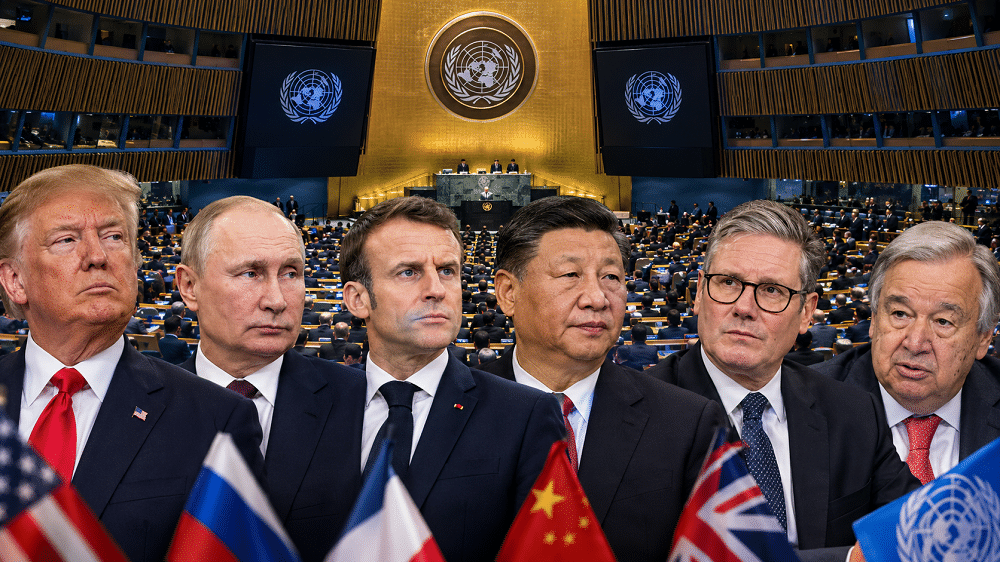
The United Nations Security Council has 15 members, but only five are permanent. They are China, France, Russia, the United Kingdom and the United States. However, the remaining ten members are elected by the General Assembly for two-year terms. This arrangement dates largely from the creation of the United Nations in 1945. At that time, the founders gave permanent status to five states that were regarded as major powers in the post-Second World War international order. More than eight decades later, however, the world looks very different.
Many countries that were not independent in 1945 are now sovereign states and members of the United Nations. Yet the permanent structure has changed very little. This raises an important question: why do some regions of the world have permanent representation while others do not?
Frequently Asked Questions
Does Africa have a permanent member?
No African country is among the five permanent members.Does Latin America and the Caribbean have a permanent member?
No country from that regional group holds a permanent seat.Does Asia have a permanent member?
Yes. China is a permanent member.Does Europe have permanent members?
France, the United Kingdom and Russia hold permanent seats, although the UN's electoral groupings do not correspond perfectly to the ordinary geographic definition of Europe.
Are permanent seats distributed equally among continents?
No. The permanent membership was established through the UN Charter and is not based on an equal allocation of seats to continents.
The Discussion
The reason some regions have permanent representation and others do not begins with history. The Security Council was created in the aftermath of the Second World War. Its permanent membership reflected the political and military realities of that period. Additionally, the original UN Charter named China, France, the Soviet Union, the United Kingdom and the United States as permanent members. The system was therefore not designed as a modern geographical map in which every continent would receive an equal seat.
The founders were concerned with another problem: how to create a security organisation in which the major powers would participate and accept its decisions. That decision produced the structure we have today. The problem is that the international community subsequently changed. Africa became composed of dozens of independent states. Many Asian countries gained independence. Latin American and Caribbean countries continued to develop their roles within the international system. The UN itself expanded dramatically. Yet the five permanent seats remained.
Is This Only an African Problem?
No. Africa's lack of permanent representation has become one of the most prominent issues in the current reform debate. Although, the African Union is seeking at least two permanent seats. But Africa is not the only region without permanent representation. Latin America and the Caribbean also have no permanent member. Current UN reform discussions have specifically identified Africa, Asia-Pacific and Latin America and the Caribbean as regions whose representation in the permanent category is under discussion.
This creates an important distinction. The argument that Africa deserves permanent representation does not necessarily mean that Africa is the only region that deserves consideration. If the principle is fairer geographical representation, then the question naturally becomes broader.
Why Were Continents Not Given Equal Representation?
Because the Security Council was never designed that way. Article 23 of the Charter identifies the five permanent members individually. For the non-permanent seats, however, the Charter specifically requires consideration of equitable geographical distribution. This is significant. The Charter created permanent membership around particular states, while geographical distribution was expressly incorporated into the election of non-permanent members.
Therefore, the principle of geographical balance applies much more directly to the elected seats than to the original permanent five. That distinction helps explain why the present system can contain geographical imbalance without technically violating the original Charter arrangement.
My Argument: Should the Historical Arrangement Remain Untouched?
This is where the debate becomes more interesting. The fact that the five permanent seats were created for understandable reasons in 1945 does not automatically answer whether the same structure remains appropriate today. The international system has changed. The number of UN members has increased, and entire regions that had little influence when the Charter was drafted now play important roles in international affairs.
The question should therefore not simply be, “Why were these five countries chosen?” That historical question has an answer. The more relevant question is: “Should a structure created around the major powers of 1945 continue to determine permanent representation in the international system of today?” That is the question at the heart of Security Council reform.
And if the answer is that representation should be broadened, then another question follows. Should reform simply add more permanent countries, or should it create a system in which different regions receive permanent opportunities to be represented through agreed rotation? The distinction matters because adding two African countries, for example, would address Africa's exclusion while still leaving other regions without permanent members.
Wind Up
Some regions have no permanent seat on the UN Security Council because the permanent structure was created in 1945 around five particular states rather than through an equal distribution of seats among the world's continents. That arrangement reflected the international order of the time. The world, however, has changed considerably since then. Africa and Latin America and the Caribbean remain without a permanent member, while current reform discussions also consider the representation of other underrepresented regions.
This does not make the historical creation of the five permanent seats meaningless. It does, however, explain why the arrangement continues to generate debate. The central issue is now representation. If the Security Council is supposed to act on behalf of the international community, how should that community be represented within its most powerful decision-making body? That question cannot be answered simply by looking backwards to 1945. It requires consideration of the world that exists today.
Comments