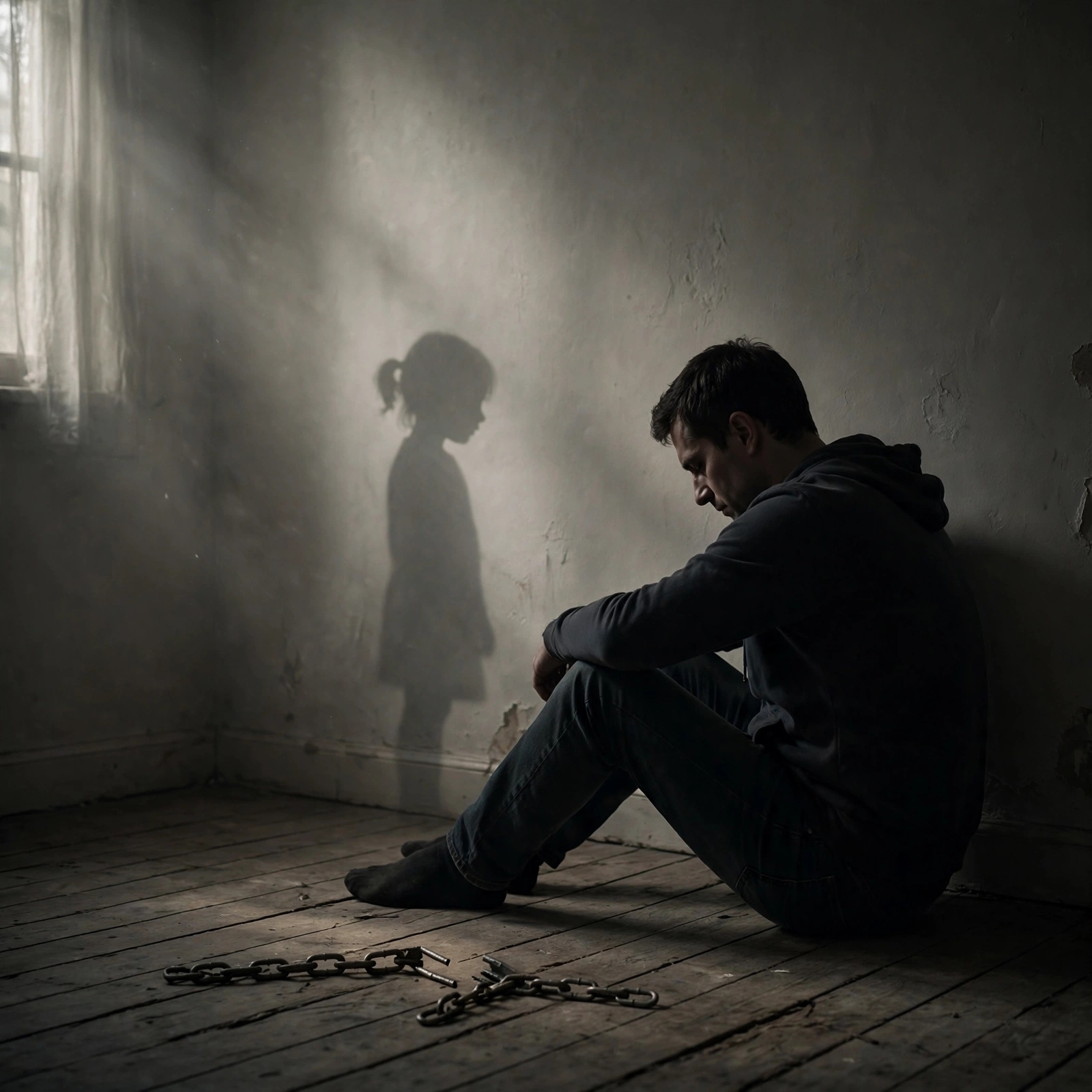
Can Childhood Abuse Explain Violent Criminal Behaviour?
When a child or children commits a crime or crimes, one question often follows: what could have led them to behave that way? Sometimes attention turns to the person's childhood. Did they grow up experiencing abuse, neglect or violence? Were they exposed to harmful behaviour before they could fully understand it? Could their early experiences have influenced how they later responded to conflict? These questions matter because childhood is an important period of emotional, social and psychological development. However, the relationship between childhood abuse and violent criminal behaviour is not straightforward.
Some people who experience abuse later struggle with anger, trust or emotional regulation. Others do not become violent at all. Meanwhile, some people who commit violent crimes have no publicly established history of childhood abuse. The challenge is to understand how childhood experiences can influence behaviour without assuming that abuse inevitably produces a criminal or that a troubled past removes responsibility for wrongdoing.
Frequently Asked Questions
Does childhood abuse cause violent criminal behaviour?
Childhood abuse is associated with an increased risk of later violence, but it does not inevitably cause violent behaviour. The relationship is complex and influenced by multiple factors.
Are all violent criminals victims of childhood abuse?
No. A history of childhood abuse should not be assumed unless there is reliable evidence. People commit violent crimes for different reasons and under different circumstances.
Can an abused child grow up without becoming violent?
Yes. Many people who experience childhood abuse do not become violent. Supportive relationships, safe environments and appropriate help can contribute to resilience.
Should childhood abuse reduce a criminal sentence?
It may be relevant when reliable evidence shows that the person's history is pertinent to sentencing. It does not automatically excuse the offence or require a reduced sentence.
What can parents and schools do to prevent future violence?
They can protect children from abuse, teach non-violent conflict resolution, establish fair boundaries, take serious threats seriously and seek appropriate professional help when persistent behavioural concerns arise.
Can Childhood Abuse Explain Violent Criminal Behaviour?
Children depend on adults for protection, emotional security and guidance. When the people responsible for their care repeatedly frighten, injure, humiliate or neglect them, their understanding of relationships and safety may be affected. A child who grows up around violence may learn to expect hostility from other people. Another may become anxious, withdrawn or unusually alert to possible threats. Some children may struggle to regulate strong emotions or develop healthy ways of resolving disagreements.
Nevertheless, these responses are not identical in every child. The effects depend on many factors, including the nature and duration of the abuse, the child's developmental stage, the availability of supportive adults and experiences later in life. It is therefore more accurate to say that abuse can affect development than to claim that it produces one predictable personality or behaviour.
Can Experiencing Violence Teach a Child to Become Violent?
A child may learn some behaviours by observing how adults treat one another. If violence is repeatedly presented as a way to settle disputes, intimidate others or gain control, the child may come to regard aggression as an acceptable response to frustration. For example, a child who frequently sees adults respond to disagreement with threats may struggle to learn constructive conflict resolution unless other influences help provide a different model.
However, exposure to violence does not guarantee that a child will copy it. Children may reject the behaviour they have witnessed, particularly when they receive support from caring adults, teachers, counsellors or other positive influences.
The important distinction is between influence and inevitability. Childhood experiences can shape behaviour, but they do not determine every future decision.
What Does Research Say About Childhood Abuse and Violence?
Research has found an association between childhood maltreatment and an increased risk of later violent behaviour. Additionally, a systematic review and meta-analysis published in Trauma, Violence, & Abuse examined 18 prospective studies involving 39,271 participants. It reported a modestly increased risk of later violent outcomes among people who had experienced childhood maltreatment, while also noting substantial variation across the studies. However, read the study by Fitton, Yu and Fazel.
These findings are important, but they must be interpreted correctly. An increased risk does not mean that most abused children will become violent, nor does it prove that abuse was the cause of a particular person's crime. Other influences may include family circumstances, exposure to community violence, peer relationships, substance misuse, untreated psychological difficulties and access to supportive relationships. Although, the relative importance of these factors differs between individuals.
Researchers must also distinguish between correlation and causation. If a study finds that childhood abuse and later violence occur together more often than expected, that does not establish that abuse alone caused the violence.
Why Do Some Abused Children Never Become Violent?
Nevertheless, this question is just as important as asking why some people with traumatic backgrounds engage in harmful behaviour. Children are not passive products of their environments. They can respond to similar experiences in different ways. A supportive teacher, a stable caregiver, access to counselling or a safe living environment may help a child develop healthier coping strategies.
Some children also find ways to understand their experiences without repeating the harmful behaviour they witnessed. They may become especially committed to protecting others from similar treatment. This variation demonstrates why it is dangerous to label abused children as future criminals. Such assumptions can stigmatise survivors and distract from the support they need. The aim should be to reduce harm and strengthen resilience, not predict a child's future from their past alone.
Does Understanding Abuse Mean Excusing a Criminal?
No. A child's or children background can help explain certain difficulties without removing responsibility for their actions. When a person commits a violent offence, investigators and courts must establish what happened and apply the relevant law. If childhood abuse is raised as part of the person's history, it should be assessed using reliable evidence rather than assumptions.
The victim's suffering must also remain part of the discussion. Understanding the offender's background should not turn the victim into a secondary concern or suggest that the offence was unavoidable. Although, in some cases, a history of abuse may be relevant to sentencing, psychological assessment or treatment. In others, its relevance may be limited. The answer depends on the evidence and the legal question being considered. A responsible approach can recognise both the harm experienced by an offender and the harm caused by that offender.
Can Early Intervention Reduce the Risk of Future Violence?
Early intervention can help children who are experiencing abuse, severe emotional distress or serious behavioural difficulties. The response may include ensuring the child is safe, providing psychological support, helping caregivers develop appropriate parenting skills and teaching children how to manage conflict. Schools can also contribute by recognising serious behavioural changes, providing access to counselling and creating clear procedures for responding to threats or aggression.
However, intervention should be based on a child's actual needs rather than an assumption that every child with a difficult background is dangerous. Support is not only for preventing crime. It is also necessary because children deserve protection, stability and the opportunity to develop in a safe environment. Where a child displays persistent and serious aggression, a qualified assessment may help identify underlying needs and suitable interventions. Early attention can be valuable without treating a child as though a future crime is inevitable.
Should Society Study the Childhoods of Violent Offenders?
Yes, where such research is conducted ethically, responsibly and with respect for victims and survivors. Studying the backgrounds of people who commit serious violence may help researchers understand possible risk factors, patterns of behaviour and opportunities for prevention. However, researchers must avoid selecting only extreme cases and then assuming that the findings apply to everyone who experienced abuse.
A sound study should consider people with different backgrounds, including those who experienced childhood adversity but did not become violent. Comparing different outcomes can help researchers identify factors associated with resilience as well as risk. The purpose should be to improve understanding and prevention, not to excuse crime or stigmatise people who have experienced trauma.
Wind Up
Childhood abuse can help explain some of the difficulties experienced by people who later engage in violent behaviour, but it is not a complete explanation for every violent crime. Human development is influenced by a combination of experiences, relationships, individual differences and later circumstances. It is equally important to recognise that most children who experience abuse should not be regarded as future criminals. They deserve protection and support, not suspicion or stigma.
Society should take childhood maltreatment seriously, study its possible long-term effects and provide appropriate intervention when children are at risk. At the same time, criminal responsibility must be assessed on the evidence of each case, with proper consideration for the victim and the harm suffered. Understanding a person's past is not the same as excusing their actions. It is a way to ask better questions, make more informed decisions and identify opportunities to prevent future harm.
Comments